Grow Organic
California Blue Bells 1/4lb
California Blue Bells 1/4lb
Couldn't load pickup availability
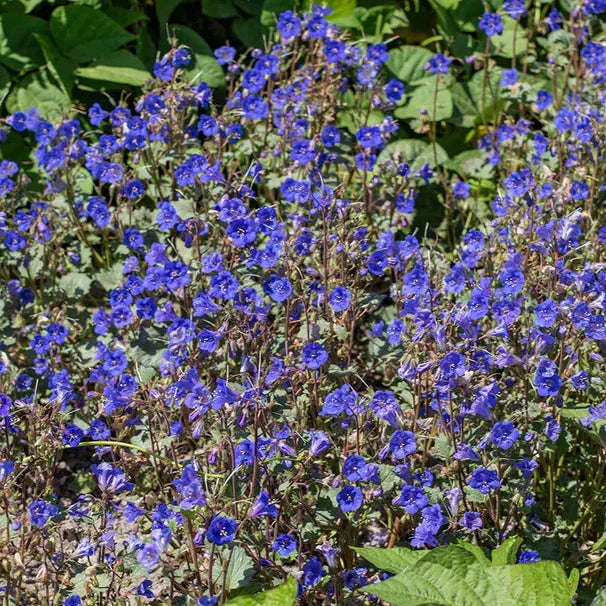
California Bluebell is a charming annual wildflower native to the Mojave and Sonoran deserts of California, prized for its vivid cobalt-blue, bell-shaped flowers and its ability to attract bees, pollinators, and other beneficial insects. Also known as desert bells and desert bluebells, this easy-to-grow native performs beautifully in wildflower gardens, cottage gardens, rock gardens, borders, and even large containers.
Blooming in as little as 70 to 80 days from seed, California Bluebell produces masses of bright blue flowers that bring lively color to the garden while supporting pollinators throughout the season. Its compact, upright, branching habit makes it especially useful for interplanting in vegetable gardens, where it helps draw in wild bees and other helpful insects.
This adaptable California native flower thrives in full sun and well-drained sandy to average soil. Although considered drought tolerant once established, plants perform best with occasional watering during extended periods of hot, dry weather. California Bluebell may self-sow, so remove spent flowers if you want to limit reseeding.
Why grow California Bluebell?
- Brilliant blue bell-shaped flowers
- Excellent for pollinators and beneficial insects
- Easy-to-grow annual wildflower
- Great for beds, borders, containers, rock gardens, and vegetable garden
- A beautiful California native plant for sunny spaces
Low maintenance - and adaptable in many garden settings
Plant Details:
How to Plant California Bluebell Seeds
Direct sow outdoors from last frost through mid-June. Succession sow every couple of weeks for a longer season of bloom and pollinator activity. Sow seeds 1/4 inch deep or on the soil surface with a very light covering, and thin seedlings to 4–8 inches apart. Direct sowing is recommended, as there is little benefit to starting seeds indoors.
Care Tips
California Bluebell is low maintenance and easy to grow in ordinary, well-drained garden soil. It may fade during long stretches of extreme heat, making it especially well suited to spring and fall gardens in warmer climates. Deadhead spent blooms to reduce self-seeding, or let plants reseed naturally for future displays.
Note: While the plant is not toxic, the fine hairs on the stems and leaves may cause mild skin irritation for some people. Wear gloves when handling or removing plants if you are sensitive.
Share