Sweet Roots Farm
Organic Feverfew
Organic Feverfew
Couldn't load pickup availability
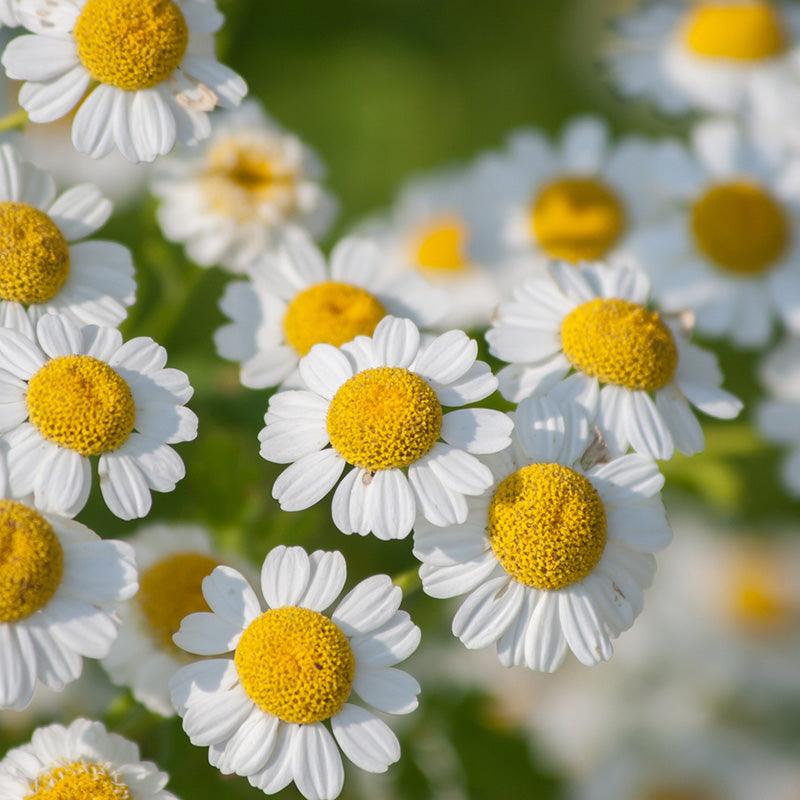
Feverfew, scientifically known as Tanacetum parthenium, is a valuable herbaceous plant appreciated for its delicate white blooms. Belonging to the Asteraceae family, it originates from Europe and Asia. Its charming appearance and medicinal properties make it a noteworthy member of the herbal world.
Sustainably grown in 2.75" pots
Selecting the Right Location
Feverfew thrives in full sun but can tolerate partial shade, especially in hotter climates. Choose a location in your garden with well-draining soil. Feverfew does not like to sit in waterlogged soil and may develop root rot if conditions are too wet.
Planting Feverfew
Plant Feverfew starts when the soil temperature is around 50°F. Plant them at the same depth as they were in their containers. Water thoroughly after planting to help the roots establish in the soil.
Watering and Care:
Feverfew prefers moist soil but can tolerate some drought once established. Water regularly, especially during dry periods, to keep the soil evenly moist. Mulch around feverfew plants to help retain soil moisture and suppress weeds. Deadhead spent flowers regularly to promote continuous blooming throughout the growing season.
Fertilizing
Feverfew is not a heavy feeder and generally does not require fertilization. However, you can apply a balanced fertilizer in the spring if your soil is poor or if the plants are showing signs of nutrient deficiency.
Pest and Disease Management
Feverfew is relatively pest-resistant and disease-free, making it an excellent choice for low-maintenance gardens. However, it may occasionally attract aphids, spider mites, or powdery mildew. Monitor your feverfew plants regularly for signs of pests or diseases and treat them promptly if necessary. Insecticidal soaps or neem oil sprays can help control pests, while removing affected leaves can help prevent the spread of diseases.
Harvesting Feverfew
Feverfew leaves and flowers can be harvested throughout the growing season for use in herbal remedies or as a fresh garnish. To harvest feverfew, simply pinch or snip off the leaves or flowers as needed. For the best flavor and potency, harvest in the morning when the oils are most concentrated.
Propagation
Feverfew can be easily propagated by division or by taking stem cuttings. To propagate by division, dig up an established clump of feverfew and carefully separate the individual plants. Replant the divisions in the garden or containers filled with potting mix. To propagate by stem cuttings, take 4-6 inch cuttings from healthy, non-flowering stems and remove the lower leaves. Dip the cut end in rooting hormone and plant the cutting in a pot filled with moistened potting mix. Place the pot in a warm, bright location and keep the soil consistently moist until roots form.
Overwintering
In colder climates, feverfew may die back to the ground in the winter and re-emerge in the spring. Provide a layer of mulch around the base of the plant to protect the roots from freezing temperatures. If desired, you can also bring potted feverfew plants indoors for the winter and place them in a cool, bright location.
Growing feverfew is a rewarding experience that can provide you with beautiful flowers and medicinal benefits. By following the tips and guidelines outlined in this guide, you can successfully grow feverfew in your garden and enjoy its many uses for years to come.
Share